Skip to content
Simon Heikkila
Menu

Product designer and design engineer for AI-native teams.

AI SPEEDWITHOUT SHORTCUTS.

I frame the problem, prototype the interface and build the system behind it. AI makes the work faster. Judgment and maintainability still decide what ships.

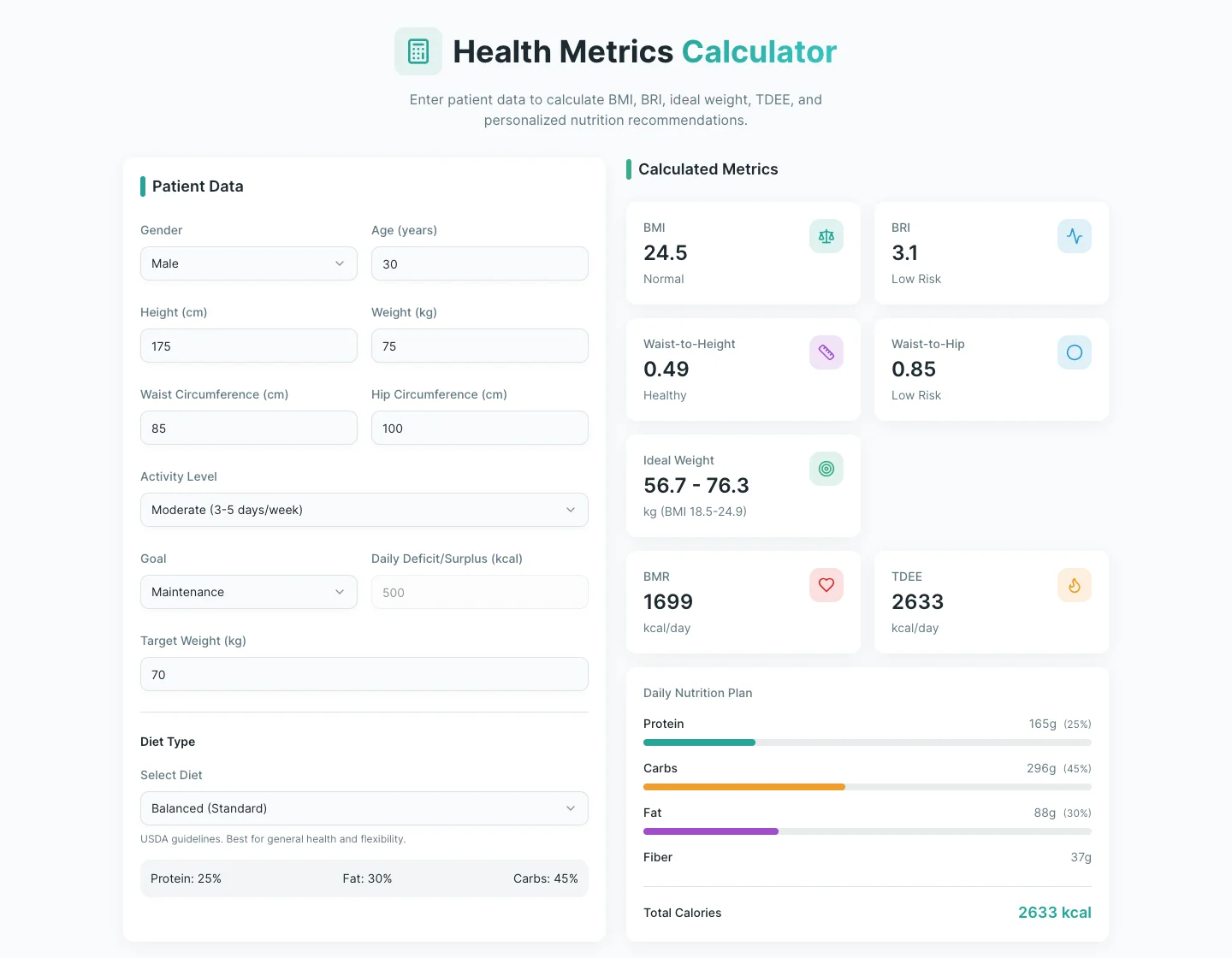
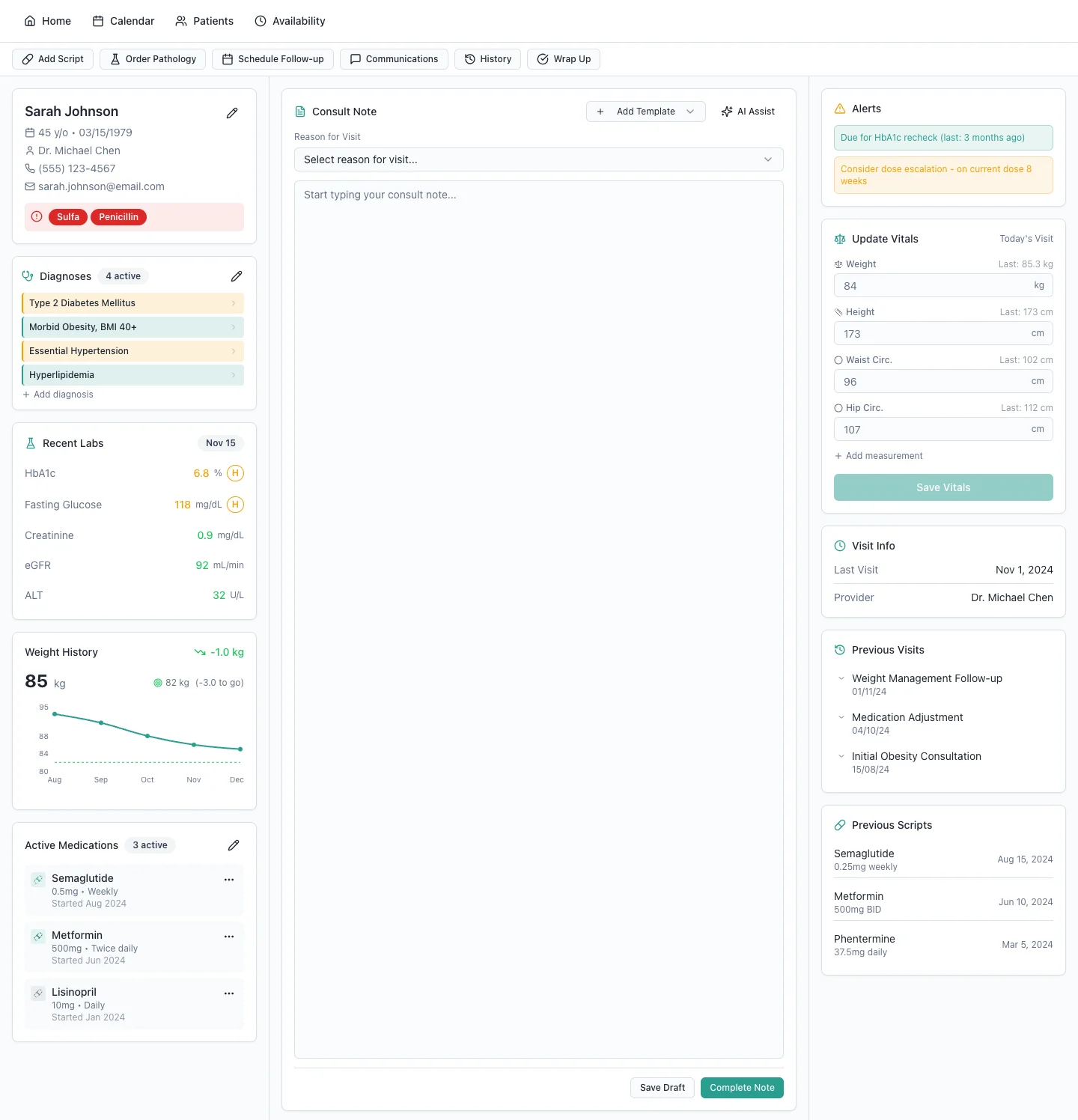
The first interface above is the clinician dashboard. Here is how it changed the build.

I turned months of clinical feedback into a clinician consult workflow the developers could build.

The clinic had spent months giving feedback on a Salesforce patient-management build, but the developers still did not have an implementable clinician workflow. I sat down with one clinical lead, used focused questions to uncover the real requirements and iterated on wireframes as each frustration became an interface decision. About two hours later, I had a working prototype organised around the consult.

“The consult note component is too long. It’s not visible without scrolling. Must be visible without scrolling.”

This was not a spacing correction. It established that the consult, current risk and patient context had to remain in one decision view.
Outcome

The clinic adapted the prototype’s screen logic into its final Salesforce build. I designed and built the prototype; the clinic’s developers implemented production.

Disclosure

Public prototype with synthetic data. Production interface confidential.

Current AI-native work

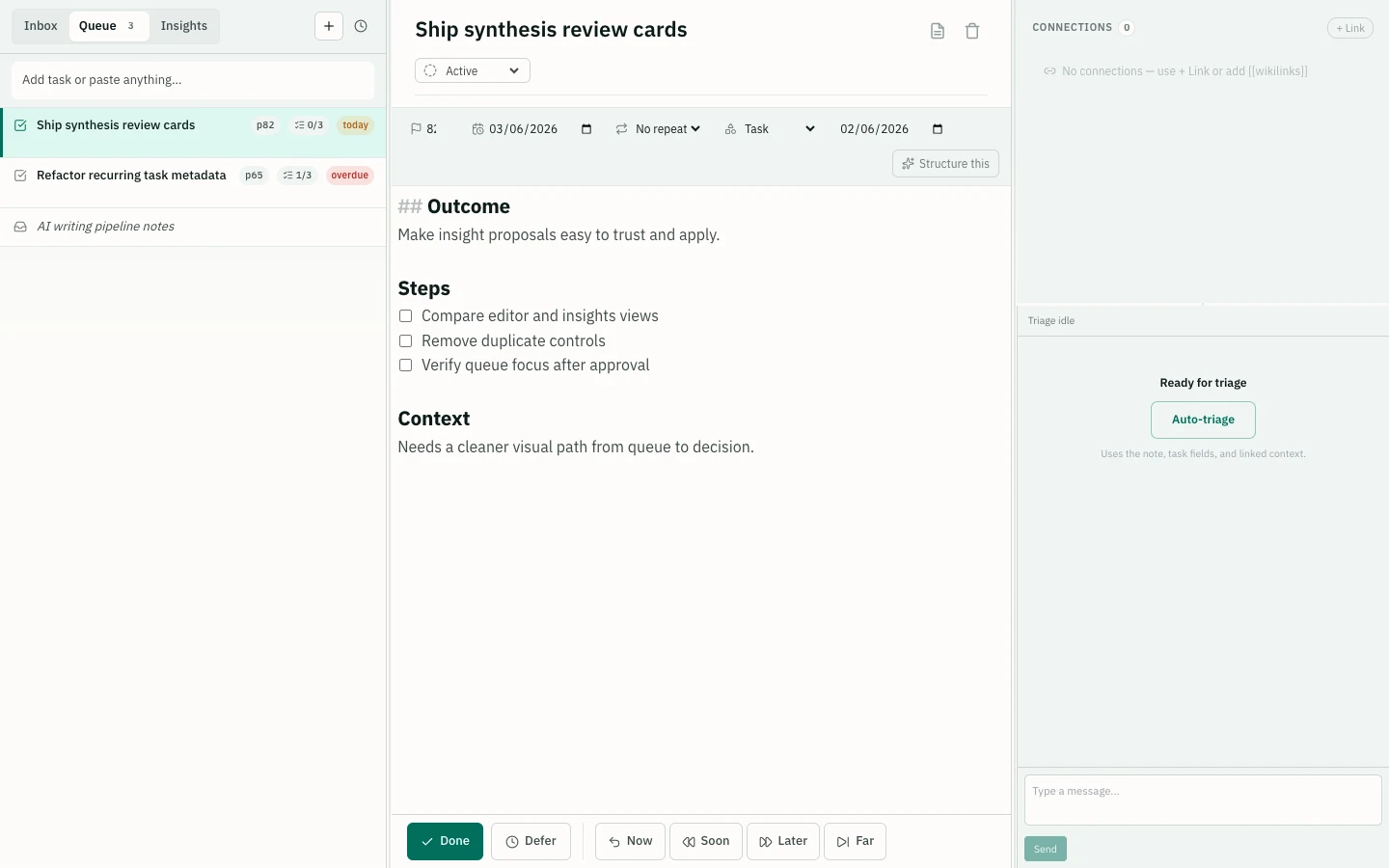
Kaikki workspace showing a queue, a structured task and the connected AI triage panel

KaikkiActive prototype

Knowledge lived in one system. Work lived in another. I built Kaikki to reconnect them.

Kaikki is an active prototype for managing knowledge and tasks in one place. AI agents triage new inputs, add relevant context and delegate the resulting work.

What moved into useKaikki remains an active prototype. I adapted its triage and delegation model into a ClickUp task system for brokers and content-review workflows. Both are in active use.

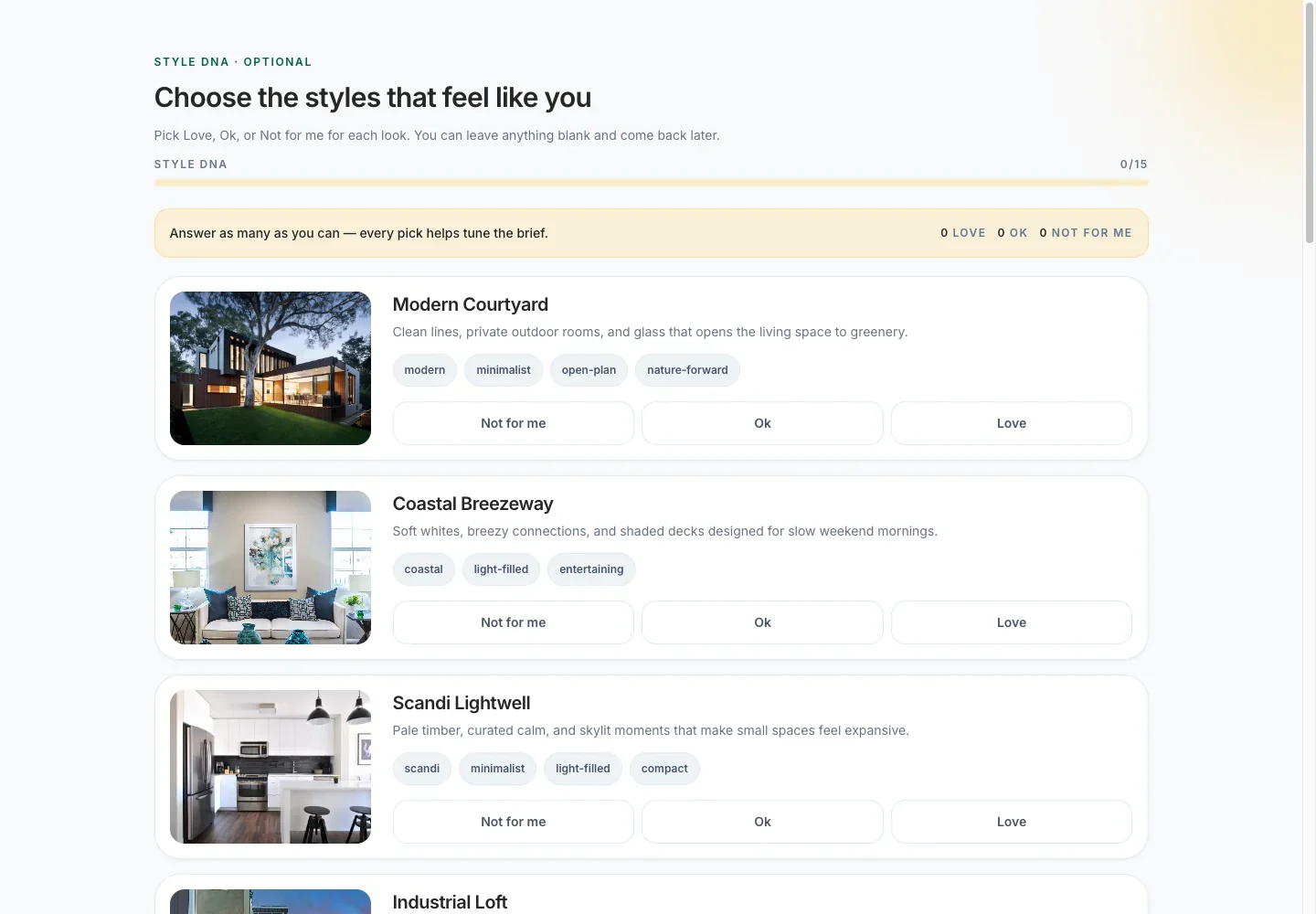
Buyer Brief Builder Style DNA step showing progressive preference choices

Buyer Brief BuilderPrototype, workflow adopted

Buyers were not completing the brief. I replaced the static PDF with an intake that adapts to what they know.

The new flow gives buyers a quick or detailed path, helps them choose suburbs when they are unsure, and only asks for deeper preferences when relevant. It produces a structured brief for the broker. I designed and built V1 with AI agents in a day.

What moved into useThe client incorporated the intake structure, UI flow and design language into live workflows. The full standalone builder is planned, but backlogged behind higher-priority platform and design-system work.

I used to run distributed Scrum teams. Now I run AI agent teams.

The planning, delegation and review discipline is the same. The difference is execution velocity. Work that once took a sprint can move from brief to reviewed build in a day.

Frame

Buyers were not completing a static PDF.

Plan

Replace the static PDF with a configurable, guided intake.

Work

Designed and built a working V1 with AI agents in a day.

Review

A long-running agent produced a large, monolithic first pass while I worked on other tasks. I reviewed it, kept the strongest ideas and restructured the experience into a simpler flow.

Compound

It wasted tokens, not time. The monolithic path became a recorded dead end and a rule for the next brief: start simple, then reveal complexity only when the answer requires it.

Frame again

The next brief begins with one less wrong turn available.

The same discipline worked before AI.

These are two earlier examples of how I worked: one inside a software company, one on a client platform. In both, I made the system explicit, found delivery risk early and reviewed the result against a clear standard.

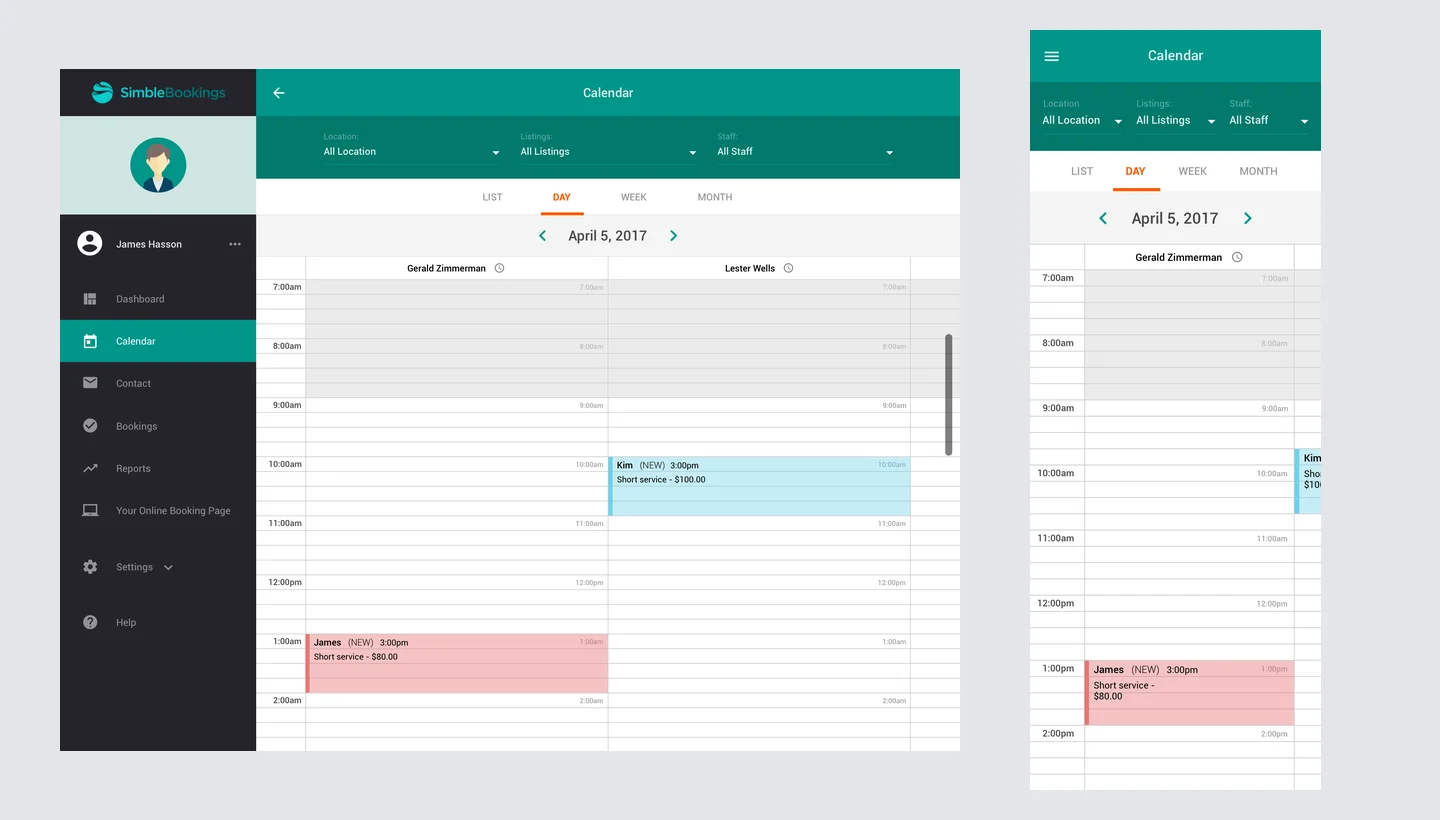
Product design at Simble Solutions, a B2B software company

I created the shared UI system for two products, then used it to review every staged screen.

As product manager and Scrum Master for the Forms and Bookings products, I took ownership of their UI/UX. I built a token-constrained Sketch library with 343 reusable symbols, designed both products from it and reviewed the implemented interface in staging. Anything that broke the system went back.

Client delivery for a mortgage-platform rebuild

I saw the delivery risk early and built a viable contingency before the cutover failed.

The vendor owned delivery, and I was working through influence rather than control. From February I maintained a parallel implementation, formalising it as a contingency fork in April and contributing critical fixes back to the main build. When the cutover failed, that work preserved a viable production path and I helped ensure the site launched.

Experience

2019–present

Heikkila Pty Ltd

Director / Product Consultant

Built products, workflow systems and investor narratives across property, healthcare and technology. The work includes interfaces adopted into production, lifecycle systems still running after seven years and pitch materials supporting more than $32M in closed fundraising.

2016–2019

Simble Solutions

Product & Operations Manager

Coordinated three distributed development teams, owned product management and Scrum Master responsibilities for Forms and Bookings, built their shared UI system, and ran Australasia operations across finance, people, risk and compliance.

2015–2016

ChildsPass

Co-founder

Co-founded a children’s activities marketplace in Vietnam, took its partner network from zero to 600 locations in six months, and designed the product end to end.

2008–2015

Veterinary practice

Veterinary Surgeon, Australia & UK

Worked across surgery, emergency and sole-charge practice, diagnosing under pressure from incomplete signals and grossing 30% above practice average as a locum.

READY FOR THE NEXT HARD PROBLEM.

I want the work where the requirements are incomplete, the workflow matters and fast execution still has to leave a coherent system behind.

Simon Heikkila · Brisbane, Australia© 2026